
★★★★★ rated by Anchorage homeowners and HOAs on Google
Most heat cable that fails in Alaska was never built for Alaska. Hardware-store cable is usually constant-wattage: it puts out the same heat whether it's –20° or +40°, it can't be cut to fit your roof, and when one section is damaged, the whole run dies. It can't go on a metal roof at all. The clips it comes with are flimsy and pull loose constantly — and loose cable is how runs end up crossing over themselves. Constant-wattage cable can't touch itself: where it overlaps it keeps pouring out heat with nowhere to send it, and the jackets can melt and fuse together, leaving exposed conductors on your roof. That's not a performance problem anymore — that's an electrical and fire hazard.
We're regularly called to replace exactly these systems — often just a few winters old.
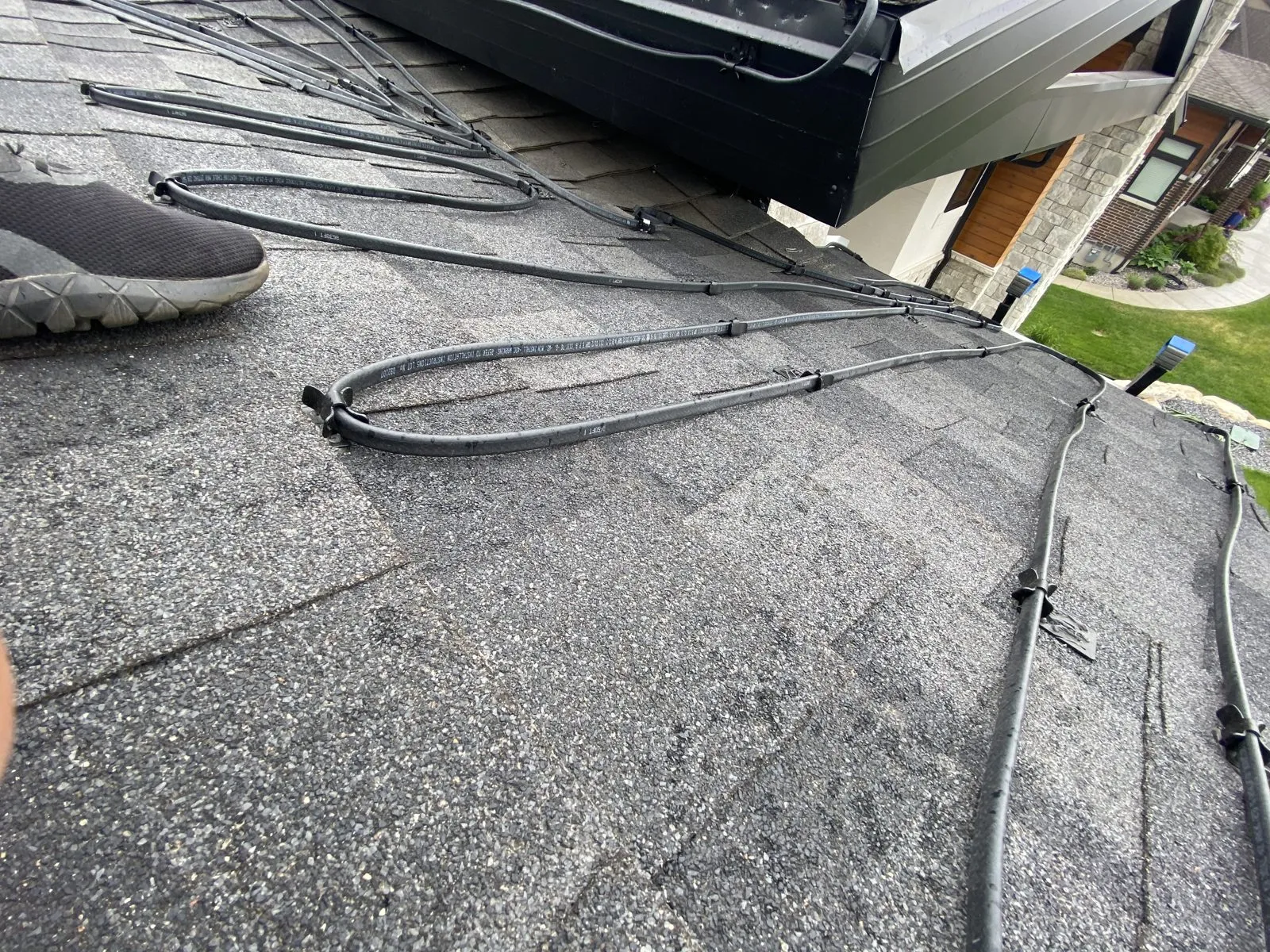
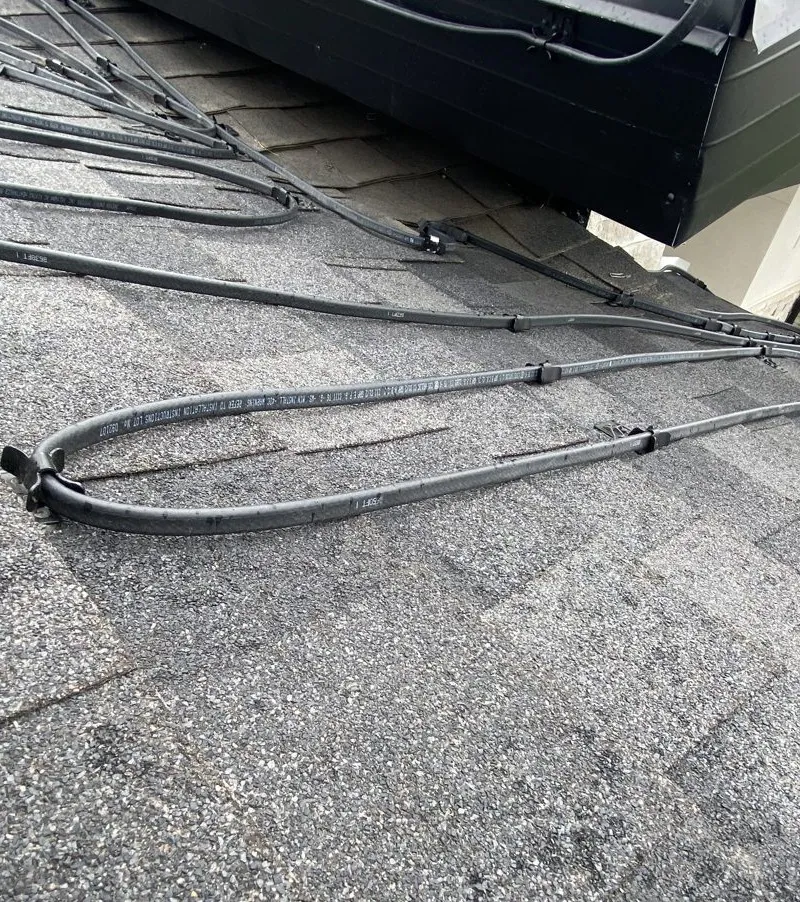
We install Drexan Multi Trace 5W self-regulating cable, in 120V and 240V, the same product used on commercial buildings. Self-regulating cable adjusts its heat output along every inch of its length — drawing more power where ice is forming and less where it isn't. It's cut to fit your roof's actual drainage paths, it can cross itself without damage, and it goes on metal roofs. It's a tough product; if it ever does take a hit — a summer lawnmower, a falling branch — we repair that section instead of replacing the whole run.
And not all self-regulating cable is built the same. Drexan's conductive core is vacuum-extruded, so there are no air voids in the line — voids are where efficiency losses start. The jacket is built for real weather exposure. And in cycle testing from our partner company Wasatch, Drexan led the field on two numbers that decide how long a roof system actually lasts: total on/off cycles, and how long the carbon core goes before it starts to crack. That second one is the quiet killer — a cracking core is how ordinary heat cable loses output as it ages. It's still powered, still warm to the touch, and no longer doing the job.
That's the difference you can't see at quote time — and it's the reason two quotes for "heat cable" can be hundreds of dollars apart. We'd rather show you what's inside the price than hide it.
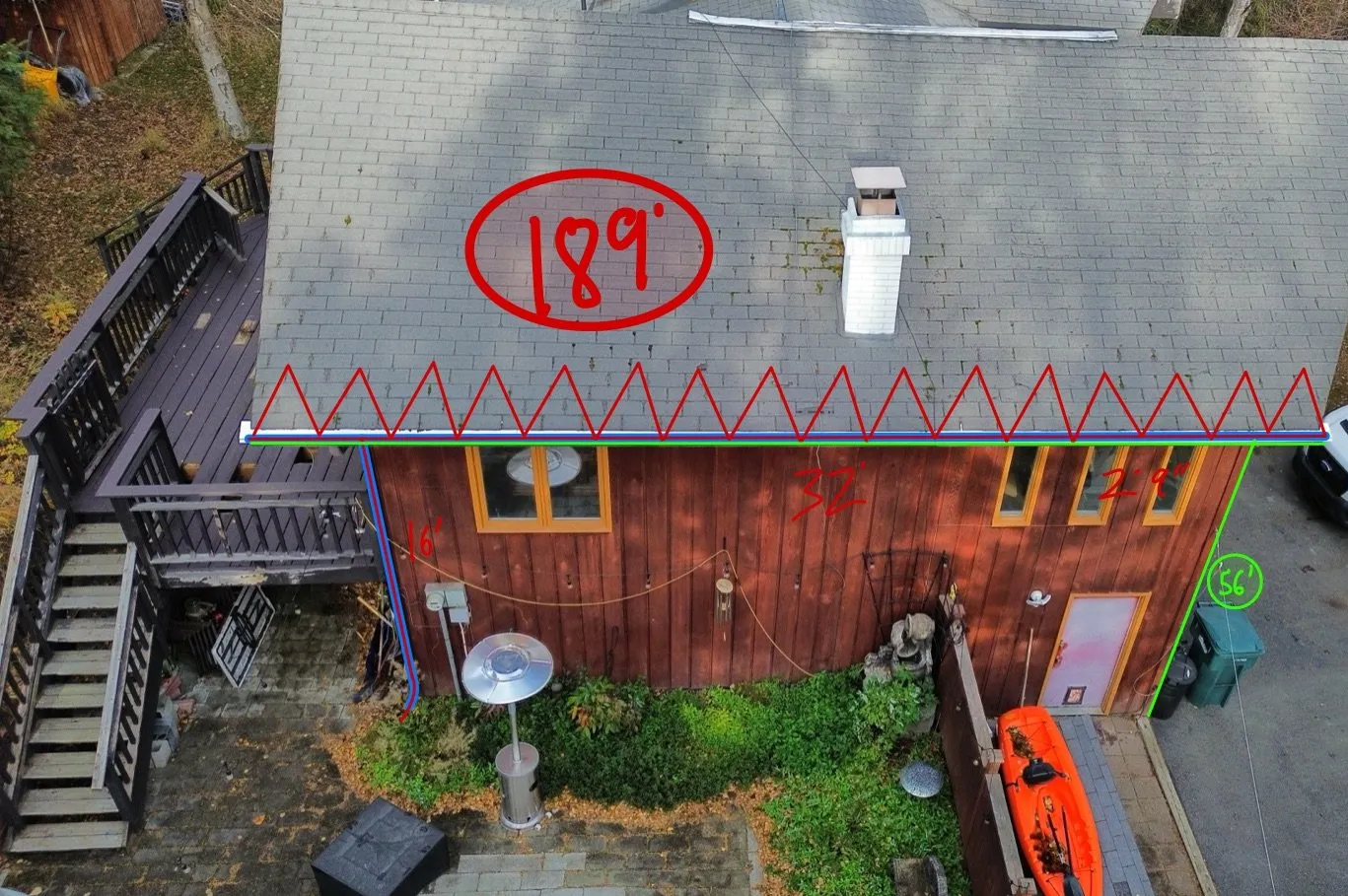 An actual quote diagram — every foot of cable mapped before pricing
No two roofs shed water the same way. Before we price anything, we fly a drone over your roof, take measurements, and map your valleys, eaves, and downspouts. You get a diagram showing exactly where every foot of cable will run — and we walk you through why.
That takes longer than a drive-by estimate. It's supposed to. We measure before we price, so the quote you approve is the system you get — no surprises mid-job, no change orders, no guessing.
"Luke actually ran a drone around the house, took measurements, and gave me a good drawing and layout of the scope of work — what it was going to look like, what it was going to entail." — Greg, repeat customer, Anchorage
Every clip we set is glued down with construction adhesive — we don't screw or drill into your roofing. Screws and barbed clips put permanent penetrations in your roof; on membrane roofs like EPDM rubber or torch-down, every one of those penetrations is a future leak point. We've seen what that looks like years later, and we won't do it to your roof.
Glue-only attachment takes an extra visit — the adhesive needs days to cure before cable goes on. We think your roof is worth the second trip.
If your roof ever genuinely requires a mechanical fastener, we'll explain why and get your written OK first — it never happens without your sign-off.
You shouldn't have to take an installer's word for it. Every Alaska Heat Cable install includes, as standard:
We verify the cable is electrically sound before it goes on your roof and again before we leave, and the readings are recorded on your job.
Before, during, and after, stored with your job file.
The spool your cable came from is logged to your job.
We register your Drexan cable so the 10-year manufacturer warranty is actually enforceable, not just a brochure line. Unregistered, untested, undocumented cable carries a warranty on paper only.
Our crew installs the system; licensed electricians install all electrical work.
Here's what that list adds up to. A manufacturer warranty is only as good as the proof behind it: the cable has to be registered, tested to the manufacturer's standards, and the results kept on file. Most installers do none of the three — that's the industry norm, not the exception. If a cable fails five years in and there's no record it was ever registered or tested, there's nothing to claim against, and the homeowner finds that out at the worst possible moment. We're one of the very few companies doing all of it, on every job.
We recommend asking any installer for written confirmation they do the same.
Your cable carries a 10-year manufacturer product warranty, registered to your installation.
If our workmanship is the cause, we come back and correct it at no charge to you. Full terms are in your written warranty.
Plain terms, in writing, before work begins — you'll know exactly what's covered and what isn't.
Some roofs can't run a standard system — and that's where most installers stop. We build custom controllers through a UL-listed panel shop: WiFi-controlled, thermostat-driven, timed, or phased systems, dozens of them a year.
One example: a historic building whose electrical service couldn't power full roof coverage — the standard answer would have been a $40,000–$50,000 main-service upgrade. Instead, we measured the building's actual load and had our panel shop build a controller that alternates which side of the roof is powered, protecting the whole roof while staying under the building's power cap. The customer kept their electrical service — and their budget.
Fully hands-off systems are the goal: on when winter needs them, off when it doesn't, no ladder trips or extension cords in January.
We come out, fly the drone, take measurements, and diagnose your electrical capacity.
A diagram of exactly where cable will run, what it will cost, and why. Financing options are included right in the bid.
Surface prep and clip gluing (plus gutters or steaming if your job includes them). The adhesive then cures before anything goes on it — about three days in summer, about a week in winter.
Cable routing, electrical work by licensed electricians, full system testing — and a walkthrough where we show you how your system works, how to run it, and what to expect all winter.
Start to finish, a summer install can be as quick as about a week. Winter runs longer: if ice forms between the two visits we steam it off first, and on some jobs that happens twice.
We install year-round — including winter. We're one of the very few heat cable companies in Alaska that does.
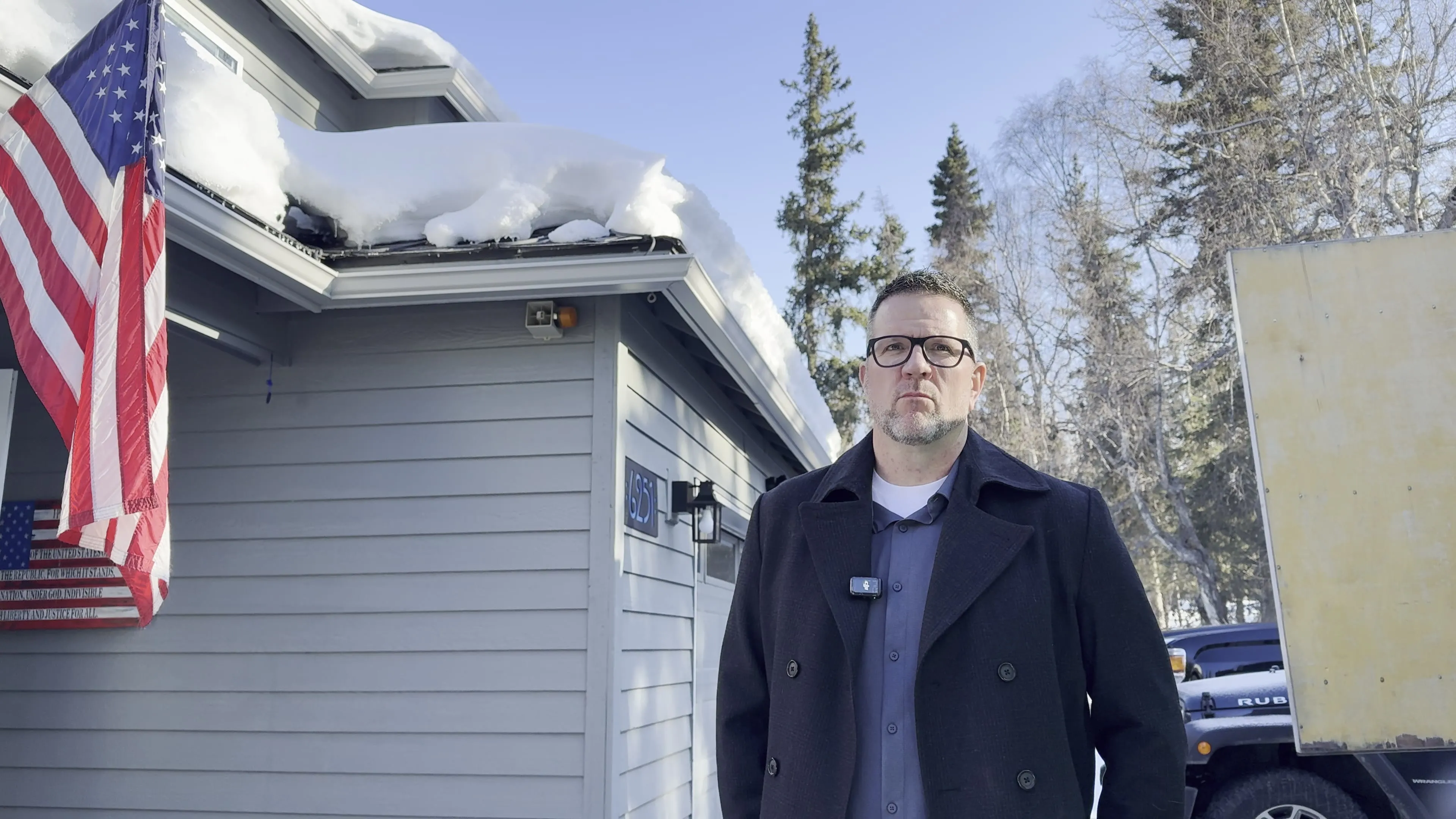
"It was a very seamless process — very, very transparent. There was nothing really hidden. There was no change of work order. We worked through all those details prior to the work taking place, and when it was finished, I was very happy with the product." — Greg, Anchorage (repeat customer) · ★★★★★
"I've tried everything. If you've got a real problem, this is the only way to go." — Homeowner, South Addition, Anchorage
It depends on your roofline, drainage paths, and electrical setup — which is why we measure before we price. Every quote includes a diagram of exactly what you're paying for, and financing options are included in the bid.
We're not the cheapest option in town, on purpose. Our work is classified as roofing, which carries the highest workers' compensation rate of any trade in Alaska — and we're licensed and insured to do it in winter, when most crews won't go up at all. That cost is in our number instead of being left out of it. The cable itself costs more than what most competitors run, too; that's a choice, and the reason your system is still working in year ten.
So what you're buying isn't really a heat cable system. It's the confidence that it works on the January night you need it, years from now, because it was designed for your roof and nobody else's.
Quality matters more than any number here: the self-regulating cable we install is a commercial-grade product, and yours is registered for its 10-year manufacturer warranty — that's the number that's backed in writing. Our 2-year workmanship warranty covers the installation itself.
Beyond that, we can tell you what our customers tell us: we have Drexan systems out there that homeowners report running 10, 15, even 20 winters without trouble. That's their experience rather than a promise we make — the warranty is the part we put in writing.
You can — and many of our customers did, before calling us. Store-bought cable is usually constant-wattage: one damaged spot kills the whole run, it can't be cut to fit your roof, and it wasn't designed for Alaska winters. If it worked well, we'd have far fewer customers.
Our standard method puts zero holes in your roof — every clip is glued, not screwed. That matters most on membrane roofs (EPDM, torch-down), where penetrations become leak points. If your roof ever requires a fastener, you'll know why and sign off first.
It stops the leaks ice dams cause: water backing up behind the ice and under your shingles. It can't fix a roof that's already letting water in. The cable keeps meltwater moving, and that water crosses your roofing on its way to the gutter — so worn shingles, damaged flashing, or a poorly installed roof can still leak. If your roof has leaked before, tell us up front. We'd rather talk it through before we install than after.
Yes — and we're one of the very few heat cable companies in Alaska that does. Most crews stop when the snow starts. We're licensed, insured, and equipped to work on roofs through the winter, which means both halves of the job can happen in the same season: we safely steam an active ice dam off your roof, then install the system that keeps it from forming again. You don't have to live with it until spring.
Licensed electricians install all electrical work on every job — that's standard, not an upgrade.
Free on-site assessment. Drone-mapped quote. No surprises.
★★★★★ on Google · 10-year manufacturer warranty · Serving Anchorage, Eagle River, Girdwood & Wasilla