
NOAA forecasts one of the strongest El Niños on record for winter 2026–27. For Southcentral Alaska that means a warmer, snow-heavy, thaw-prone winter — exactly the conditions that build ice dams. What the science says and what to do before the snow flies.
Read the article →Two things keep roof heat cable from running away with your electric bill: self-regulating cable that throttles its own draw, and a controller that only runs the system when it senses both cold and moisture. How to calculate your actual cost from your system's wattage and your utility rate.
Ice damsSame street, same storm, different roofs: ice dams come from your attic, your roofline, and your exposure — not the winter. The four roof factors that decide which Anchorage houses grow ice, and what each one means for the fix.
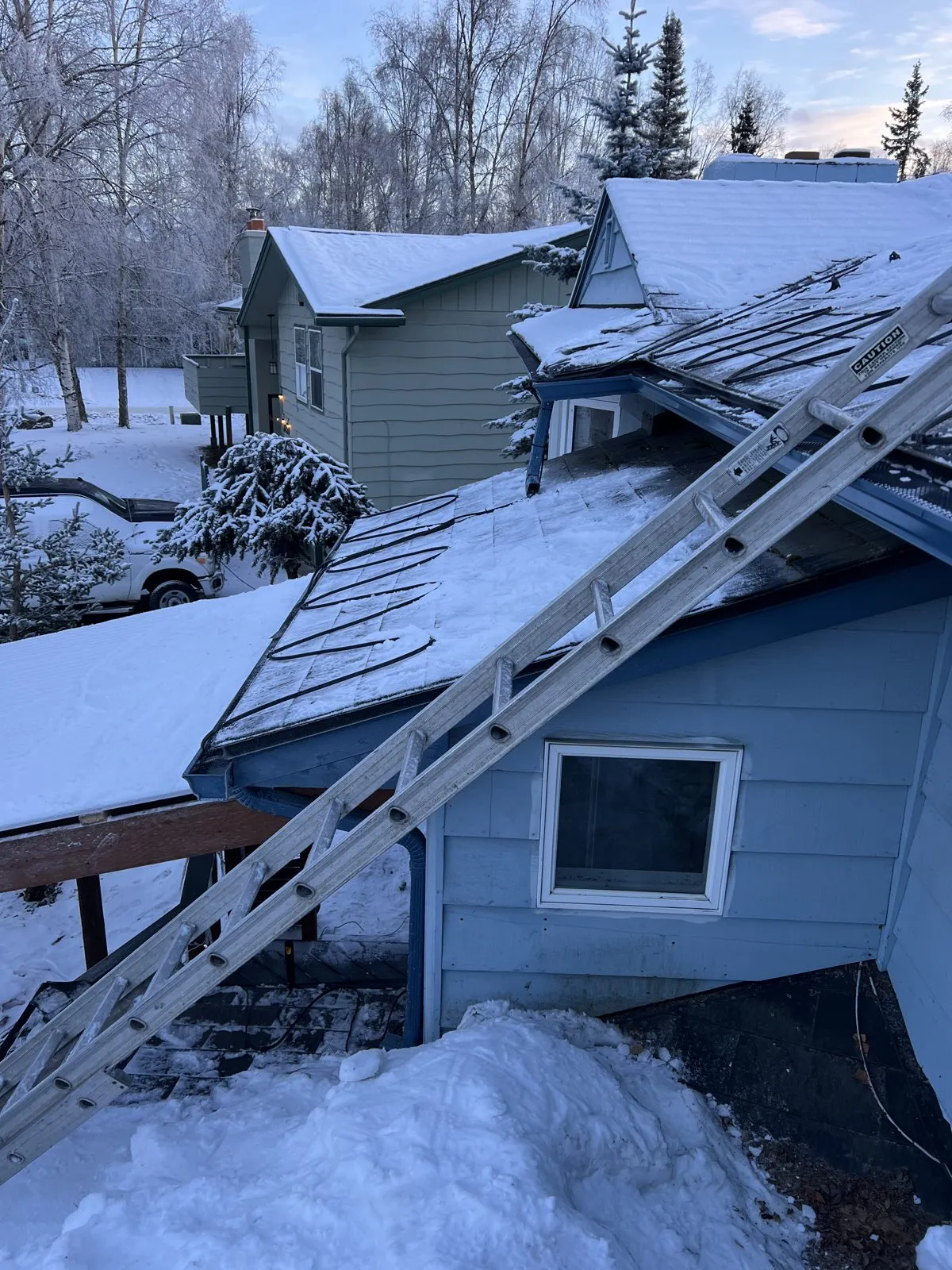
Heat cableA working heat cable system looks like drainage, not heat: melted channels through the snow, water reaching the ground. How to check your system from the ground in two minutes — breaker, plug, controller, visible damage — before you call anyone.
No articles in this topic yet — more are on the way.
Free on-site assessment — we'll show you where your roof melts, where it refreezes, and what actually needs doing. If the honest answer is 'you're fine,' that's what we'll say.
★★★★★ on Google · Serving Anchorage, Eagle River, Girdwood & Wasilla